If your church has a website — and nearly every church does in 2025 — then ADA compliance is no longer optional. It's a legal responsibility, a ministry imperative, and a reflection of the values your church stands for. Yet thousands of church websites remain inaccessible, exposing their ministries to lawsuits, alienating members with disabilities, and shutting the digital door on people who are seeking Christ.
In this guide, we'll explain exactly why your church needs to be ADA compliant — the legal landscape, the ministry case, the practical benefits, and what happens if you ignore it.
The church that builds a wall — even an accidental digital one — between its message and the people it's called to reach is working against its own mission. Accessibility is the open door.
What Does ADA Compliance Mean for a Church?
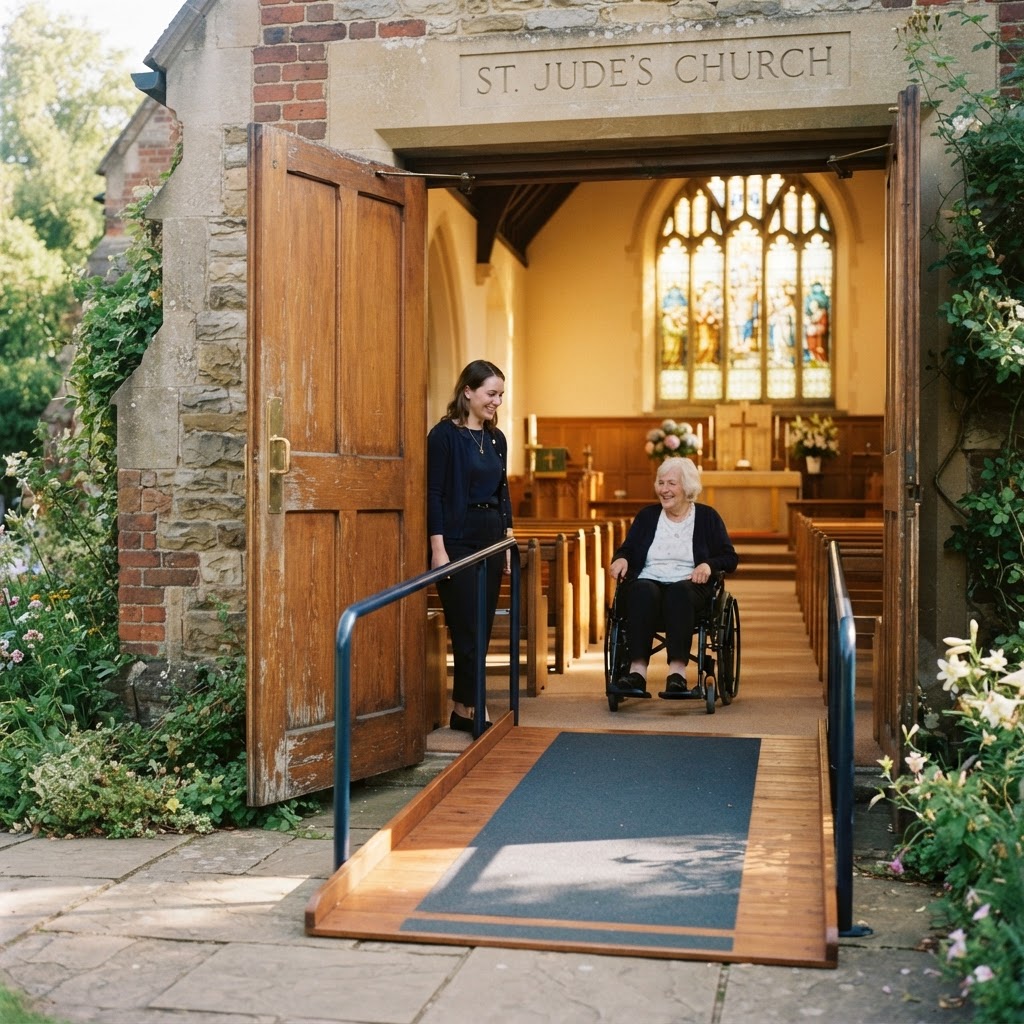
The Americans with Disabilities Act (ADA) was passed in 1990 to ensure that people with disabilities have equal access to public accommodations. Originally focused on physical spaces — ramps, wide doorways, accessible restrooms — the ADA has increasingly been interpreted to cover digital spaces as well, including websites.
For a church, ADA compliance means ensuring that your website, mobile app, and digital content can be used by everyone — including people who are blind, deaf, have motor disabilities, cognitive disabilities, or other impairments. The technical standard most commonly referenced is WCAG 2.1 Level AA — the Web Content Accessibility Guidelines.
- Visual accessibility: Proper color contrast, scalable text, alt text on images
- Keyboard navigation: Full operability without a mouse for members with motor disabilities
- Screen reader compatibility: Semantic HTML and ARIA labels for members using assistive technology
- Audio/video accessibility: Captions and transcripts for sermons and video content
- Cognitive accessibility: Clear language, consistent navigation, readable fonts
The Legal Risk: Are Churches Really Being Sued?
Yes. The number of ADA web accessibility lawsuits has exploded in recent years. Over 4,000 ADA web accessibility lawsuits are filed annually in federal court — and churches, nonprofits, and small businesses are not exempt.
Courts have increasingly ruled that websites are "places of public accommodation" under the ADA, regardless of whether the organization is a nonprofit or religious institution. While some religious organizations have argued for exemptions, the trend in case law is clear: if your website is public-facing, you can be sued for inaccessibility.
- $25,000+ — average cost of an ADA lawsuit settlement
- 4,000+ — ADA web accessibility lawsuits filed annually
- 26% — of U.S. adults live with some form of disability
- Nonprofits — are NOT exempt from ADA requirements
Even if a lawsuit is ultimately dismissed, the legal fees, stress, and reputational damage are real. The safest, most responsible approach is compliance — and it's far less expensive than litigation. Learn more in our ADA Accessibility service.
The Ministry Case: Who Are We Excluding?
Beyond the legal risk, there's a deeper question every church should ask: who are we unintentionally shutting out?
One in four American adults lives with a disability. That includes members of your congregation and people in your community who are seeking a church home. If your website isn't accessible, you're telling them — without saying a word — that they aren't welcome, that their needs aren't considered, and that your church hasn't thought about them.
- The blind member who uses a screen reader to navigate the web — can they find your service times?
- The deaf visitor who watches your sermon videos — are there captions?
- The elderly member with low vision — can they read your event calendar without straining?
- The parent of a child with disabilities — researching churches online — can they access your beliefs and programs?
- The member with motor disabilities — can they fill out your prayer request form without a mouse?
The gospel is for everyone. Your website should reflect that. Read our article on thinking about these members and visitors for a deeper look at the human side of accessibility.
Practical Benefits of ADA Compliance
1. Better SEO and Search Rankings
Many accessibility practices overlap with SEO best practices — alt text, clear headings, descriptive links, fast-loading pages. Google rewards accessible websites with better rankings. An ADA-compliant church website is more likely to be found by seekers searching for a church in your area. See our local SEO guide.
2. Greater Trust and Credibility
A polished, accessible website signals that your church is professional, caring, and thoughtful. Visitors judge your church by your website before they ever walk through the door. Accessibility shows you care about every person.
3. Higher Engagement and Giving
If members can't navigate your site, they can't give online, register for events, or access sermon content. Accessibility removes barriers to engagement — and by extension, to giving. Learn more about church donation software.
4. Future-Proofing Your Ministry
Accessibility standards evolve. A website built with accessibility in mind is easier to maintain and update. Starting compliant means staying compliant — and avoiding expensive remediation later.
What WCAG 2.1 AA Requires
WCAG 2.1 AA is the benchmark referenced in most ADA litigation. It's organized around four principles — the POUR framework:
- Perceivable: Content must be presentable in ways users can perceive — alt text, captions, contrast
- Operable: Interface components must be operable — keyboard navigation, no time limits, clear focus
- Understandable: Content and operation must be understandable — clear language, consistent navigation, error prevention
- Robust: Content must be interpretable by assistive technologies — semantic HTML, valid code, ARIA where needed
Common Accessibility Barriers on Church Websites
- Missing alt text: Images without descriptions — blind members see nothing
- Poor color contrast: Light gray text on white — unreadable for low-vision members
- No keyboard navigation: Every interaction requires a mouse — impossible for some motor disabilities
- Uncaptioned videos: Sermon videos without captions — deaf members are excluded
- Unlabeled forms: Prayer request and contact forms without proper labels — screen readers can't interpret them
- Inaccessible PDFs: Bulletins and newsletters as image-only PDFs — not readable by assistive tech
- Small fixed text: Font sizes that can't be enlarged — a barrier for elderly members
How to Make Your Church Website ADA Compliant
- Step 1: Audit. Run a full WCAG 2.1 AA audit — identify every accessibility barrier on your site
- Step 2: Remediate. Fix every issue — alt text, contrast, keyboard support, captions, form labels, heading hierarchy
- Step 3: Add an accessibility widget. A customizable menu (text size, contrast, cursor options) empowers users — see our ADA compliance widgets guide
- Step 4: Test with real tools. Test with screen readers (NVDA, JAWS), keyboard-only navigation, and contrast analyzers
- Step 5: Maintain. Review every new page and content update for compliance before publishing
- Step 6: Publish an accessibility statement. A page stating your commitment and how to request help
Common Myths About Church ADA Compliance
- "Churches are exempt from the ADA." While religious organizations have some exemptions for physical spaces, courts have ruled websites can still be subject to accessibility requirements. Don't assume you're protected.
- "Our church is too small to be sued." ADA lawsuits target organizations of every size — including small churches. Plaintiff firms use automated scanners to find non-compliant sites.
- "We'll just add a widget and be compliant." A widget helps, but it doesn't fix underlying code issues. True compliance requires structural remediation plus ongoing maintenance.
- "Accessibility is too expensive." The cost of compliance is a fraction of the cost of a lawsuit — and it grows your reach. It's an investment, not an expense.
How MyChurch Helps Churches Become ADA Compliant
At MyChurch, ADA compliance isn't an afterthought — it's built into every website we design and manage. Our ADA Accessibility service includes:
- Full WCAG 2.1 AA audit of your current website
- Complete remediation of every accessibility barrier
- Customizable accessibility menu widget on every page
- Alt text, captions, keyboard navigation, and form labeling
- Ongoing compliance monitoring on every content update
- Quarterly full-site accessibility audits
- Accessibility statement page
Your church is called to reach everyone. Don't let an inaccessible website become a barrier between your ministry and the people who need it most. Schedule a free accessibility audit today and take the first step toward a website that welcomes every person.
Ready to Transform Your Church's Digital Presence?
Schedule a free consultation with our ministry technology experts and discover how a custom church app or AI-powered tools can grow your congregation.
Book Consultation →