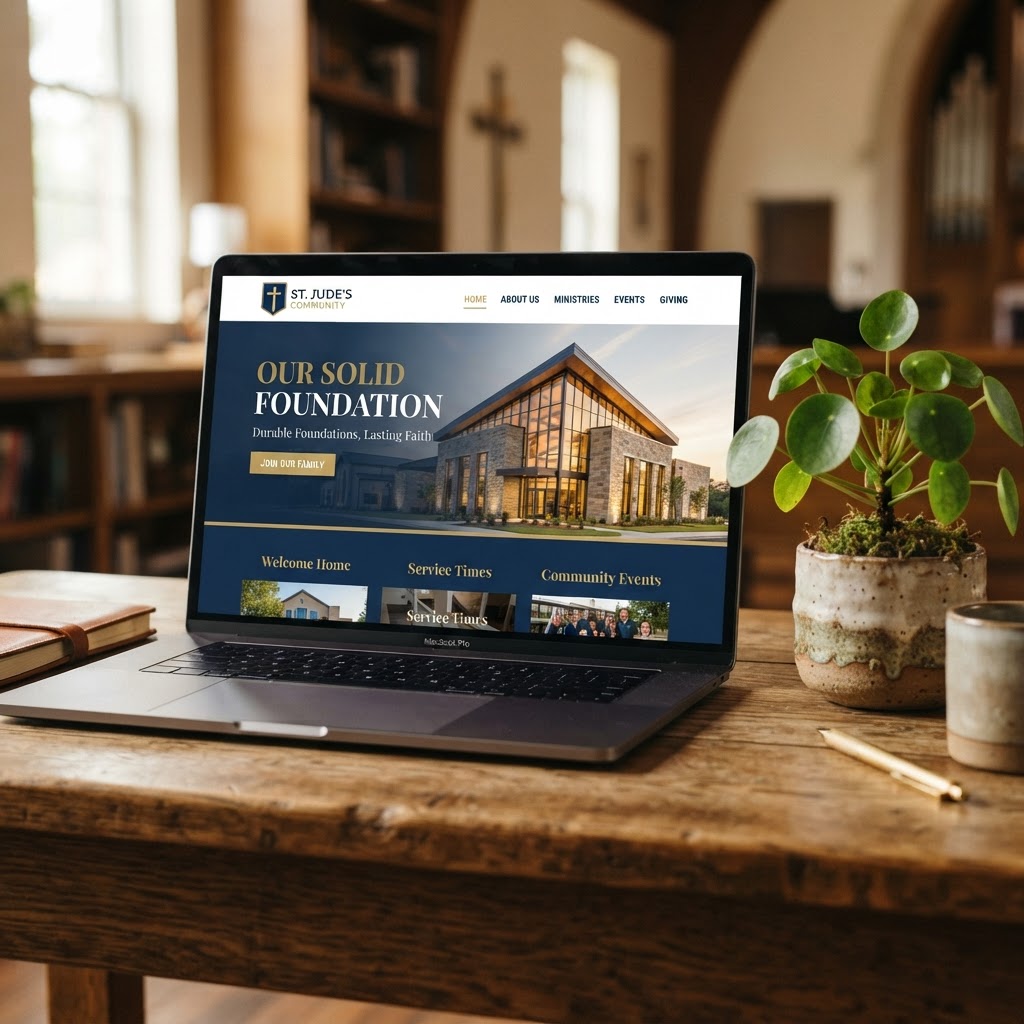
A church website isn't a one-time project — it's a long-term ministry asset. Yet many churches invest in a site that looks great at launch but starts to crack within two years: pages break, content goes stale, security vulnerabilities appear, and the design feels dated. The question every church leader should ask is simple: is my church website built for the long run?
In this guide, we'll walk through the signs of a future-proof church website — and the red flags that suggest it's time to rebuild.
A website built for the long run isn't just launched — it's maintained, secured, and evolved. The churches that invest in durability reach more people, for longer, with less waste.
Signs Your Church Website Is Built for the Long Run
1. Scalable, Flexible Architecture
A long-run website is built on a content management system (CMS) that grows with you — not a rigid template that breaks when you add a new page or ministry. Whether you add a campus, launch a new ministry, or start a podcast, the site adapts without a rebuild.
- Pages can be added, edited, and reorganized by non-technical staff
- The structure supports new ministries without custom development
- Templates are consistent — new pages look like they belong
2. Mobile-First and Responsive Design
Over 60% of church website traffic comes from mobile devices. A long-run site is built mobile-first — meaning it's designed for phones first, then scaled up to desktop, not the other way around. If your site is hard to use on a phone, it's not built for the long run. See our church website speed guide for why mobile performance matters.
3. SEO Built Into the Foundation
A future-proof site has SEO baked into its architecture — not bolted on as an afterthought. That means clean URLs, fast load times, structured data, readable code, and a blogging platform that lets you publish fresh content. See our local SEO for churches guide.
- Every page has editable meta titles and descriptions
- The site loads in under 3 seconds
- There's a blog or news platform for fresh content
- Google Search Console is connected and monitoring index health
4. ADA Compliance and Accessibility
Accessibility isn't optional — it's a legal and ministry requirement that will only grow stricter. A long-run site meets WCAG 2.1 AA standards today and is positioned to meet future standards. See our ADA compliance guide and ADA Accessibility service.
5. Security and Backups
A durable site is a secure site. That means SSL encryption, regular security updates, strong passwords, daily backups, and malware monitoring. A site that hasn't been updated in a year is a security liability — not a long-run asset. See our church website security guide.
6. Maintainable by Your Team — or a Partner
A long-run website doesn't depend on the one volunteer who built it. If your webmaster leaves and no one can update the site, it wasn't built for the long run. Durability means either: (a) your staff can update it easily, or (b) you have a management partner keeping it fresh. See our Website Management service.
7. A Content Strategy That Keeps It Alive
A site built for the long run has a plan for fresh content — sermons posted weekly, a blog that's updated regularly, events kept current, and seasonal content rotated in. A site with a 2023 events page still live in 2026 is not built for the long run. See our church content strategy guide.
8. Analytics and Insights
A durable site measures its impact — Google Analytics 4, Search Console, and conversion tracking for key actions (plan a visit, contact, give). You can't improve what you don't measure.
9. Reliable, Fast Hosting
A long-run site lives on hosting that's fast, reliable, and scalable. Cheap shared hosting that goes down during your Easter service peak is not built for the long run. See our Hosting service and website speed guide.
10. Integration-Ready
A future-proof site connects to your other tools — ChMS, giving platform, church app, email marketing, and live streaming. A site that's a dead-end island won't serve a growing church.
Red Flags Your Website Is Not Built for the Long Run
- It hasn't been updated in 6+ months: Stale content signals a neglected site
- Only one person can update it: A single point of failure is a durability risk
- It's not mobile-friendly: You're losing 60% of your visitors
- It loads slowly: Visitors leave before they see your church
- No SSL (https): Browsers flag it as insecure — visitors flee
- No backups: One hack or server failure and it's gone
- No blog or fresh content platform: SEO stagnates and seekers don't find you
- Built on a platform that's being discontinued: If your builder is sunsetting, your site is on borrowed time
- Hard to add new pages or ministries: Every change requires a developer
- No analytics: You have no idea if anyone's visiting or what they do
If several of these red flags sound familiar, it may be time for a redesign. See our church website redesign guide.
The Cost of a Short-Term Website
A cheap, short-term website costs more in the long run — in lost visitors, lost credibility, lost giving, and eventual rebuild costs. A church that rebuilds its website every 2 years spends far more than a church that builds a durable site and maintains it. See our church website cost guide for the real economics.
How to Build a Church Website for the Long Run
- Choose the right platform: A scalable CMS (WordPress, a managed church platform, or a custom build) — see our best church website builders guide
- Invest in professional design: A template that looks like every other church won't stand out for long
- Build mobile-first: Design for phones, then scale up
- Bake in SEO from day one: Clean URLs, fast hosting, structured data, a blog
- Make it ADA compliant: Accessibility is a long-term legal and ministry necessity
- Set up security and backups: SSL, daily backups, updates, monitoring
- Choose fast, reliable hosting: Don't skimp on the foundation
- Have a management plan: Either train staff or partner with a management service
- Create a content strategy: Sermons, blog, events — keep it fresh
- Connect your tools: ChMS, giving, app, email — make the site the hub
- Plan for annual refreshes: A durable site evolves — review design and content yearly
How MyChurch Builds Websites for the Long Run
At MyChurch, we've been building church websites since 2010 — and many of our early sites are still serving their churches today because they were built to last. Our Church Website Design service builds sites on scalable, secure, ADA-compliant foundations — and our Website Management service keeps them fresh, secure, and effective for years.
Is your church website built for the long run? If you're not sure — or you know the answer is no — schedule a consultation. We'll assess your site and help you build a digital presence that serves your church for years to come.
Ready to Transform Your Church's Digital Presence?
Schedule a free consultation with our ministry technology experts and discover how a custom church app or AI-powered tools can grow your congregation.
Book Consultation →