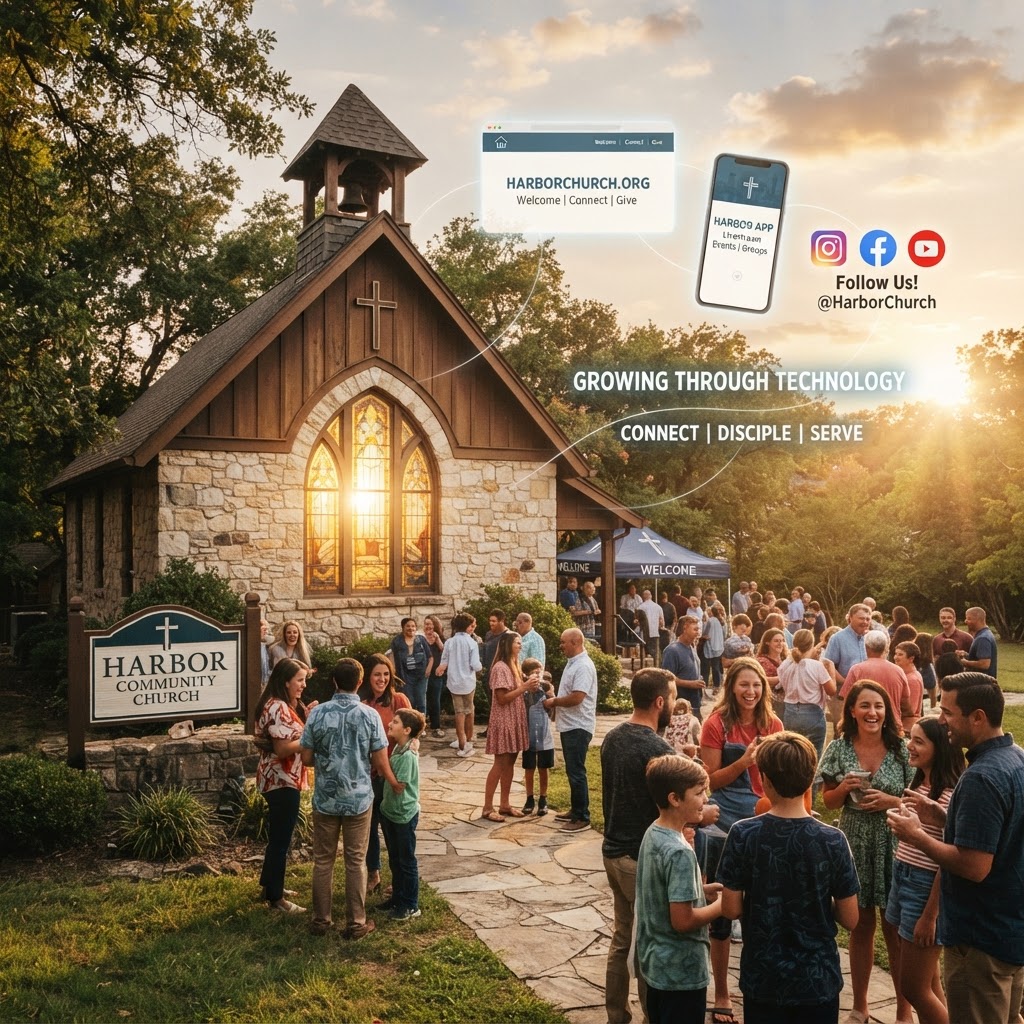
Growing a small church is one of the most rewarding challenges in ministry. Small churches have something big churches often lose — deep relationships, personal connection, and a family atmosphere that keeps members engaged for life. But without intentional growth strategies, even the most loving congregation can slowly decline. If your church has plateaued or is shrinking, you're not alone — and there is a clear path forward.
In this guide, we'll walk through 15 proven strategies to grow a small church in 2025 — from improving your digital presence to strengthening visitor follow-up, increasing engagement, and building a sustainable growth engine that works for congregations of any size.
Small churches don't need a bigger building to grow — they need a clear strategy, a welcoming culture, and a digital presence that helps people find them. Growth follows intentionality.
Why Small Churches Struggle to Grow
Before we dive into strategies, it's important to understand why small churches often plateau:
- No digital presence: When people search for a church online, yours doesn't show up — local SEO matters
- Poor visitor follow-up: First-time guests leave and never hear from anyone — visitor follow-up is critical
- Outdated website: A website from 2015 signals your church is out of touch — see redesign signs
- No community presence: The church is invisible outside of Sunday morning
- Burned-out leadership: A few people doing everything, with no systems to share the load
- Fear of change: "We've always done it this way" kills growth before it starts
- No giving infrastructure: Making it hard for members to give — giving platforms help
Strategy 1: Build a Website That Attracts Visitors
Your church website is your digital front door. Before anyone visits your building, they visit your website. If your site is outdated, slow, or hard to navigate, potential visitors will choose another church — one that looks alive and welcoming online.
- Modern, mobile-friendly design: Over 60% of church searches happen on phones — your site must look great on mobile
- Clear service times and address: Put this above the fold — don't make people hunt for it
- "Plan Your Visit" page: A dedicated page answering first-time visitor questions — what to wear, what to expect, where to park
- Fast loading speed: If your site takes more than 3 seconds to load, visitors leave — see speed guide
- ADA accessibility: Make your site usable for everyone — ADA widget guide
If your website needs a complete rebuild, our church website design service creates custom, conversion-focused sites designed to turn visitors into members.
Strategy 2: Master Local SEO So People Can Find You
When someone Googles "churches near me" or "church in [your city]," your church should appear in the top results. Local SEO is how you get there — and it's one of the most effective, free growth strategies available.
- Claim your Google Business Profile: This is the #1 local SEO action — see our local SEO guide
- Optimize for "church near me": Use your city name naturally throughout your website
- Get Google reviews: Ask happy members to leave reviews — reviews boost rankings and build trust
- Create location-specific content: Blog about community events, local partnerships, and church activities
- Build local citations: Ensure your church is listed correctly on directories
Strategy 3: Optimize Your Google Business Profile
Your Google Business Profile is the box that appears on Google Maps and in local search results. For small churches, this is often the single most important digital asset — more important than your website for first impressions.
- Add accurate service times, address, and phone number
- Upload photos of your building, congregation, and events
- Post weekly updates — sermons, events, announcements
- Respond to every review — positive and negative
- Add a link to your website and online giving
Strategy 4: Create a Visitor Follow-Up System
Most small churches lose visitors because there's no follow-up system. A guest attends Sunday, fills out a connection card (or doesn't), and never hears from the church again. Here's a simple system that works:
- Sunday afternoon: Send a personal text or email thanking them for visiting
- Monday: Mail a handwritten note or small gift
- Wednesday: Invite them to a small group or upcoming event
- Following Sunday: Personally greet them again and introduce them to others
- Two weeks out: Invite them to coffee or lunch with the pastor
An AI church assistant can automate much of this follow-up — sending personalized messages, answering questions, and scheduling connections.
Strategy 5: Launch a Church Mobile App
A church app keeps your congregation connected all week — not just on Sunday. Small churches often think apps are only for large congregations, but a church app is one of the most powerful engagement tools for churches of any size.
- Push notifications: Send sermon reminders, event updates, and prayer requests — push message guide
- Sermon audio and video: Members can catch up on missed sermons anytime
- Online giving: One-tap giving increases donations by 30%+ — giving through app
- Event calendar: Members always know what's happening
- Prayer wall: Members share and pray for each other — prayer wall guide
Strategy 6: Start a Church Blog for SEO
A church blog is one of the most underused growth tools. Every blog post is a new page Google can rank — bringing people to your website who are searching for answers. Write about:
- Common questions about your church and community
- Local events and community involvement
- Sermon series recaps and devotionals
- How-to guides for new Christians
- Church tech and ministry topics — content strategy guide
Strategy 7: Be Active on Social Media
Social media is where your community spends their time. A consistent, authentic presence builds awareness and keeps your church top of mind.
- Post 3-5 times per week: Sermon clips, event photos, devotional thoughts
- Use Facebook and Instagram: These are where most church members are active — social media strategy
- Share member stories: Testimonials build credibility and emotional connection
- Go live: Stream services or special events — livestreaming guide
- Engage, don't just broadcast: Reply to comments, ask questions, build community
Strategy 8: Build a Small Groups Ministry
Small groups are where real discipleship and connection happen. Churches with thriving small group ministries retain new members at significantly higher rates than churches without them.
- Start with 2-3 groups based on life stage or location
- Train group leaders — don't just send people out unprepared
- Use a ChMS to track group participation
- Promote groups in the app, website, and Sunday announcements
- Make joining easy — no awkward sign-ups or prerequisites
Strategy 9: Serve Your Community
Churches that serve their communities grow. When people see your church actively loving the neighborhood, they're drawn to it. Community service is evangelism through action.
- Host free community events — block parties, food drives, back-to-school giveaways
- Partner with local schools, shelters, and nonprofits
- Offer free services — oil changes, tutoring, job help
- Promote your outreach on your website and social media
- Invite the community to participate — not just attend
Strategy 10: Make Giving Easy
If your church only accepts cash and checks on Sunday, you're missing 50%+ of potential giving. Younger generations give online — through apps, text, and recurring payments.
- Online giving platform: Set up a modern giving solution — compare platforms
- Recurring giving: Encourage members to set up monthly auto-giving
- Give in the app: One-tap giving increases donations significantly
- Text-to-give: Simple, fast, and effective for spontaneous giving
- Transparent finances: Show where the money goes — trust drives generosity
Strategy 11: Build an Email List
Email is still one of the most effective communication channels. Build a list of members and visitors, and send a weekly newsletter with:
- Sermon recap and discussion questions
- Upcoming events and announcements
- Prayer requests and praise reports
- Links to give, sign up, and get involved
- Devotional content from the pastor — email marketing guide
Strategy 12: Develop Leaders and Volunteers
A small church can't grow if the pastor does everything. Equipping volunteers is essential — it multiplies your capacity and deepens member commitment.
- Identify potential leaders and invest in them
- Create clear role descriptions — people need to know what they're signing up for
- Use volunteer management tools — volunteer management
- Train and equip — don't just recruit and abandon
- Celebrate and appreciate volunteers publicly
Strategy 13: Nail the First Impression
What happens in the first 5 minutes of a visitor's experience determines whether they come back. Audit your church's first impression:
- Parking: Is visitor parking clearly marked and close to the entrance?
- Greeting: Is someone stationed at the door to welcome guests?
- Signage: Can visitors find the restroom, kids' check-in, and sanctuary without asking?
- Environment: Is the space clean, well-lit, and inviting?
- Kids' ministry: Is check-in safe, fast, and reassuring for parents?
- Follow-up card: Is there an easy, non-awkward way to collect contact info?
Strategy 14: Make Prayer Central
Churches that pray together grow together. Make prayer a central part of your church's culture — not an afterthought.
- Hold regular prayer meetings — before service, midweek, or early morning
- Create a prayer chain — share requests via app or text — text messaging guide
- Use a prayer wall in your church app — prayer wall
- Pray for visitors by name during the week
- Share answered prayers — it builds faith and community
Strategy 15: Track What Matters
You can't grow what you don't measure. Track these key metrics monthly:
- Weekly attendance: Is it trending up or down?
- Visitor retention rate: What percentage of first-time guests return?
- Website traffic: Are more people finding you online? — traffic guide
- Giving trends: Is giving growing with attendance?
- Volunteer participation: Are more members serving?
- Google rankings: Are you showing up for local searches?
Set up Google Analytics and Search Console to track website performance — data-driven decisions beat guesswork every time.
Common Mistakes That Hinder Small Church Growth
- Copying mega-church strategies: What works for a 5,000-person church often doesn't work for 50. Play to your strengths — relationships and intimacy.
- Neglecting the website: An outdated website signals a church that's out of touch — is your website built for the long run?
- No visitor follow-up: Visitors who aren't followed up with rarely return — systematize it.
- Resistance to technology: Apps, online giving, and websites aren't optional anymore — they're essential.
- Burned-out pastor: One person can't do everything. Build a team — volunteer management.
- Inward focus: A church that only serves itself stagnates. Look outward — serve your community.
How MyChurch Helps Small Churches Grow
At MyChurch, we've helped 200+ congregations grow their digital presence and reach more people for Christ. We provide:
- Custom church websites designed to attract and convert visitors — website design
- Church mobile apps with giving, sermons, push notifications, and prayer wall — mobile apps
- Local SEO services to help people find your church — SEO services
- Online giving through Give Pot — Give Pots
- AI church assistant for visitor follow-up and engagement — AI assistant
- ADA compliance for an accessible website — ADA services
- Ongoing website management so you can focus on ministry — management plans
Growing a small church takes time, intentionality, and the right tools. But with a clear strategy and a digital presence that works, your church can reach more people, deepen engagement, and build a thriving congregation. Schedule a free consultation today — let's grow your church together.
Ready to Transform Your Church's Digital Presence?
Schedule a free consultation with our ministry technology experts and discover how a custom church app or AI-powered tools can grow your congregation.
Book Consultation →